


Regatta Bay Golf & Yacht Club
Rating Snapshot


About
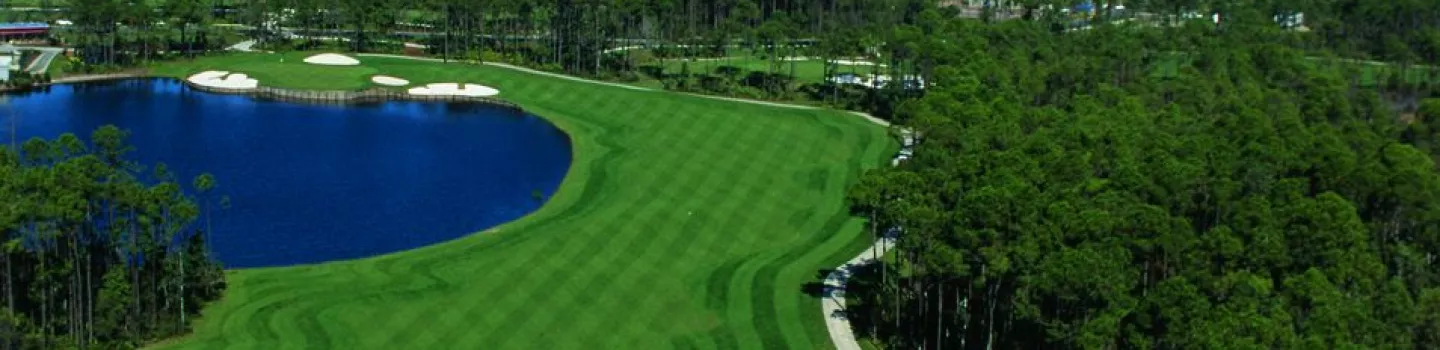
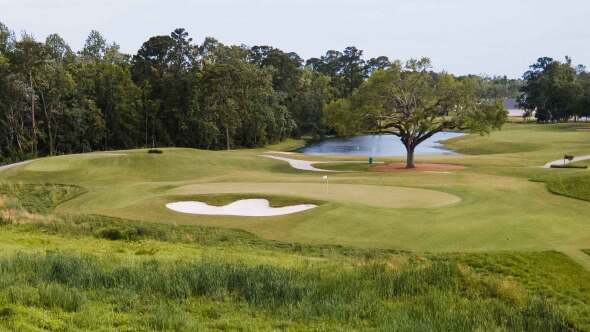
Regatta Bay Golf & Yacht Club sits amongst the nature preserves that reside along Choctawhatchee Bay, enjoying scenic views and a beautiful landscape. Robert C. Walker, Arnold Palmer's former lead architect, designed the course. Water comes into play throughout in the form of sparkling blue lakes and meandering streams. The most memorable use of water comes is on the challenging 16th hole. This tricky par 4 has water to the left as well as a marsh area crossing the fairway. Being so close to the water, the golf course is often subject to strong prevailing winds. Despite its many challenges, Regatta Bay Golf & Yacht Club is a fair challenge that players of all skill levels can enjoy, which is perhaps why it has been called one of North America's top courses by Golf Digest.
| Tee | Par | Length | Rating | Slope |
|---|---|---|---|---|
| Black | 72 | 6840 yards | 74.2 | 147 |
| Blue | 72 | 6383 yards | 72.0 | 141 |
| White | 72 | 5965 yards | 70.3 | 136 |
| Gold (W) | 72 | 5636 yards | 72.2 | 121 |
| Gold | 72 | 5636 yards | 68.5 | 128 |
| Green | 72 | 4817 yards | 64.2 | 118 |
| Green (W) | 72 | 4817 yards | 69.4 | 121 |
| Orange | 72 | 4138 yards | 61.9 | 112 |
| Orange (W) | 72 | 4138 yards | 64.7 | 114 |
| Hole | 1 | 2 | 3 | 4 | 5 | 6 | 7 | 8 | 9 | Out | 10 | 11 | 12 | 13 | 14 | 15 | 16 | 17 | 18 | In | Total |
|---|---|---|---|---|---|---|---|---|---|---|---|---|---|---|---|---|---|---|---|---|---|
| Black M: 74.2/147 | 544 | 409 | 195 | 434 | 566 | 425 | 456 | 193 | 357 | 3579 | 403 | 379 | 450 | 183 | 376 | 202 | 432 | 311 | 525 | 3261 | 6840 |
| Blue M: 72.0/141 | 515 | 389 | 158 | 414 | 540 | 396 | 421 | 169 | 336 | 3338 | 381 | 357 | 439 | 160 | 339 | 172 | 410 | 286 | 501 | 3045 | 6383 |
| White M: 70.3/136 | 494 | 365 | 143 | 390 | 517 | 371 | 393 | 146 | 314 | 3133 | 359 | 341 | 420 | 152 | 319 | 152 | 356 | 257 | 476 | 2832 | 5965 |
| Gold M: 68.5/128 W: 72.7/122 | 473 | 331 | 124 | 373 | 495 | 343 | 369 | 146 | 288 | 2942 | 336 | 341 | 399 | 136 | 295 | 152 | 331 | 251 | 453 | 2694 | 5636 |
| Green M: 64.2/118 W: 69.3/121 | 394 | 331 | 106 | 282 | 392 | 307 | 333 | 134 | 236 | 2515 | 284 | 266 | 335 | 111 | 260 | 135 | 285 | 227 | 399 | 2302 | 4817 |
| Orange M: 61.9/112 W: 64.7/114 | 324 | 252 | 106 | 224 | 363 | 248 | 264 | 75 | 236 | 2092 | 248 | 266 | 294 | 111 | 260 | 135 | 236 | 167 | 329 | 2046 | 4138 |
| Handicap | 9 | 5 | 17 | 1 | 3 | 7 | 11 | 15 | 13 | 4 | 8 | 10 | 18 | 16 | 14 | 2 | 12 | 6 | |||
| Par | 5 | 4 | 3 | 4 | 5 | 4 | 4 | 3 | 4 | 36 | 4 | 4 | 5 | 3 | 4 | 3 | 4 | 4 | 5 | 36 | 72 |
| Handicap (W) | 5 | 7 | 15 | 13 | 1 | 11 | 9 | 17 | 3 | 2 | 8 | 16 | 10 | 12 | 14 | 6 | 18 | 4 |
Course Details
Rentals/Services
Practice/Instruction
Policies
Food & Beverage
Snacks, Restaurant, Beverage CartsAccolades
-
Golf Advisor: Top Courses in Florida (2018 #22)
Reviews
Reviewer Photos
-
Photo submitted by u000006747726 on 02/08/2024
-
Photo submitted by DwayneE on 10/05/2023
-
Photo submitted by Troop911 on 08/24/2023
-
Photo submitted by austinbooth on 08/09/2023
-
Photo submitted by u000005184474 on 06/21/2023
-
Photo submitted by GeorgeD709 on 06/01/2023
-
Fairways covered with thatch and hay. Not worth $123 even in a tourist town. Photo submitted by u314159574893 on 05/06/2023
-
Photo submitted by tdamon32 on 04/01/2023
-
Photo submitted by johntroy17 on 02/28/2023
-
Photo submitted by lancette on 02/23/2023
-
Photo submitted by u314159776304 on 02/01/2023
-
Photo submitted by jlwoodall on 10/11/2022
-
Photo submitted by u314160512422 on 08/06/2022
-
Photo submitted by Kx1TkJHW0mptcBB3CZ9P on 06/25/2022
-
Photo submitted by Kx1TkJHW0mptcBB3CZ9P on 06/25/2022
-
Photo submitted by bgIO9wvPsDa3rZ2wVMXD on 06/22/2022
-
Photo submitted by bgIO9wvPsDa3rZ2wVMXD on 06/22/2022
-
Photo submitted by u314162850363 on 06/13/2022
-
Photo submitted by vDM07o6nUoULjNbi9wqp on 06/12/2022
-
Photo submitted by vDM07o6nUoULjNbi9wqp on 06/12/2022
-
Photo submitted by vDM07o6nUoULjNbi9wqp on 06/12/2022
-
Photo submitted by vDM07o6nUoULjNbi9wqp on 06/12/2022
-
Photo submitted by u000005225323 on 04/16/2022
-
Photo submitted by AdrianoMM on 04/08/2022
-
Photo submitted by u314162465095 on 02/01/2022
-
Fun time! Photo submitted by cindy1131 on 01/11/2022
-
Photo submitted by u3349083 on 12/11/2021
-
Photo submitted by u3349083 on 12/11/2021
-
Photo submitted by Kyle2346210 on 12/01/2021
-
Photo submitted by Kyle2346210 on 12/01/2021
-
Photo submitted by Kyle2346210 on 12/01/2021
-
Photo submitted by Kyle2346210 on 12/01/2021
-
Photo submitted by u000001789969 on 11/13/2021
-
Island green....fun hole Photo submitted by u000001789969 on 11/13/2021
-
Heaven on earth Photo submitted by u321579385 on 10/17/2021
-
Photo submitted by t9GUQKQftxtj7FTZxwYT on 09/08/2021
-
Photo submitted by cartermerrill1010 on 09/05/2021
-
Photo submitted by cartermerrill1010 on 09/05/2021
-
Nice par 3 Photo submitted by u314162113093 on 08/28/2021
-
Photo submitted by rtd7MH3wOwkltxaTmVzK on 06/08/2021
-
Better play it up in these fairways! Photo submitted by JeffUpton on 04/25/2021
-
Tee boxes looked abysmal Photo submitted by JeffUpton on 04/25/2021
-
Lush fairways?? Photo submitted by JeffUpton on 04/25/2021
-
More sand on these greens than you'll find on the Destin beaches Photo submitted by JeffUpton on 04/25/2021
-
Good luck rolling a putt through this mess. Photo submitted by JeffUpton on 04/25/2021
-
Fungus? Not sure. But dark green paint doesn't hide the issue. Photo submitted by JeffUpton on 04/25/2021
-
Photo submitted by u453009614 on 03/19/2021
-
Photo submitted by u070342744 on 03/11/2021
-
Photo submitted by u000006906835 on 02/03/2021
-
Photo submitted by u000006133920 on 01/18/2021
-
No slack, all smack! Photo submitted by Brian1423139 on 01/16/2021
-
Photo submitted by nutria1007 on 12/28/2020
-
Photo submitted by u314161063842 on 11/30/2020
-
Photo submitted by u314161063842 on 11/30/2020
-
Photo submitted by u314161063842 on 11/30/2020
-
Photo submitted by JASON9137002 on 11/24/2020
-
Photo submitted by dixontj93060 on 11/17/2020
-
Photo submitted by RBcory on 09/25/2020
-
Photo submitted by RBcory on 09/25/2020
-
Photo submitted by Southrnboy on 09/08/2020
-
Photo submitted by u3116471 on 07/18/2020
-
Photo submitted by ugb8UP6MAq4eWGu3HxJE on 07/17/2020
-
The 18th hole Photo submitted by u314159877652 on 05/14/2020
-
Hole 8, Par 3 — Carry water ~ 120, flag ~ 175 Photo submitted by TSmitty2 on 12/29/2019
-
Hole 18, Par 5 — Approach shot, carry water ~180, flag at 200. Photo submitted by TSmitty2 on 12/29/2019
-
Photo submitted by Fernando3316130 on 07/24/2019
-
Photo submitted by Fernando3316130 on 07/24/2019
-
Photo submitted by Fernando3316130 on 07/24/2019
-
Hole #7 Photo submitted by Emoweeh on 05/17/2018
-
Hole #18 Photo submitted by Emoweeh on 05/17/2018
-
Tee box on No. 11 Photo submitted by BrandonWebb on 07/25/2017
-
Approach shot on No. 11 Photo submitted by BrandonWebb on 07/25/2017
-
Par-3, 8th hole Photo submitted by BrandonWebb on 07/25/2017
-
View of approach shot on the par-5, 18th hole Photo submitted by BrandonWebb on 07/25/2017
-
18th hole Photo submitted by BrandonWebb on 07/25/2017
-
Photo submitted by Sleepytime on 09/21/2012

Greens not “ pristine greens” as written in their site
Greens were overgrown which created difficulties putting. On the website the course should have indicated the greens conditions to allow players to decide if they wanted to play the course or not.
Until the greens are playable I wouldn’t recommend this course for the price.
It is a beautiful course with very friendly staff.
We appreciate the feedback so thanks for taking the time to share your thoughts and experience with us. Conditions of our greens are always a focus for us so we will share your comments with our team. We’re committed to continuous improvement so please come back and give us another try sometime soon! Thanks again for your business and your valuable feedback!
Great course in destin
Great course in Destin, Fl. Course wasn’t over challenging, but still difficult to play. Really enjoyed my round. Tee boxes and fairways were nice. Only complaint would be green speed. When we played the greens were extremely slow. Couldn’t get a feel for them which led to a higher score than what should have been. Overall, a great value with the hot deal.
Thanks for the detailed feedback! We really appreciate learning about your experience and use it to grow and improve every day. Come back soon!
Thanks for the detailed feedback! We really appreciate learning about your experience and use it to grow and improve every day. Come back soon!
Thanks for the detailed feedback! We really appreciate learning about your experience and use it to grow and improve every day. Come back soon!
Thanks for the detailed feedback! We really appreciate learning about your experience and use it to grow and improve every day. Come back soon!
Thanks so much for the 5-star rating! We're delighted you enjoyed your round at Regatta Bay! Hope to see you out here again soon!
Hello and thank you for your 5-star rating! We're delighted you enjoyed your round. Please book another round with us soon, and thanks for choosing Regatta Bay Golf & Yacht Club!
Thanks for your 5-star rating! We're delighted you had a great experience with us. Come back soon and thanks again for choosing Regatta Bay Golf & Yacht Club!
Thanks for your 5-star rating! We’re glad you had a great experience at Regatta Bay. Come back again soon!

Great people and great course
The people at Regatta Bay are always helpful and polite. Like most days wihere you hit every shot perfect on the range, I played horribly. I hit a few more good shots on the range as I passed it on the way in. The timing was good and they let me play number 1 again when I drove in. Again, starter, clubhouse, and cart return were friendly and course in great condition.
Thank you for taking the time to leave comments! We’re so glad you had a great experience and we hope you come back again soon and save those perfect shots for the course next time instead of the range! We really appreciate you!
Overpriced, but not a bad course
We paid just under $200 pp for a round with someone who was playing for free via his hotel location. He had a young child with him, who the starter said was not to play, but the child had clubs and hit on every hole. While they were very nice people, this made for basically a 5-some and the child was not well versed in golf etiquette and would talk and walk around when others were trying to hit. The 5-some set up made the round go much longer than planned. For the price we paid, I was expecting a different experience that the starter/ranger should have monitored. The course was in fair condition. We have played many other courses in Florida in better condition and much cheaper green fees. I doubt I would play here again for that price.
We regret to hear that we didn’t meet your expectations today but would like to learn more and make it right. Please give me a call 704 575 2060. Thank you for the feedback - John Z. Guest Services Manager, Regatta Bay Golf & Yacht Club
Nice course overall
Tees, fareways and greens were in nice conditions. They were doing some repairs to the turn in certain areas on fareways and on one green, there were literally squares missing towards the edge. Not horrible but hadn't experienced that before.
Thank you for taking the time to share your thoughts and for the great rating! You are correct, it is customary to make continual course improvements after winter damage. In this case, new turf will be installed in time to effectively heal in the early spring season. Come back in a month and the sod sections will be fully healed, looking and playing great! Thanks again for your business!
Thank you for taking the time to share your thoughts and for the great rating! You are correct, it is customary to make continual course improvements after winter damage. In this case, new turf will be installed in time to effectively heal in the early spring season. Come back in a month and the sod sections will be fully healed, looking and playing great! Thanks again for your business!
Average course
Good course layout. Greens were slow, a few were in rough shape. Several tee boxes had weeds all over them.
This is a $70-$85 course and not worth $170
Thanks for the feedback, we’re always listening and learning to invest and improve player experience. Course conditions will vary throughout the year and we price accordingly as such. Thanks again and come back soon!
Hello and thank you for your 5-star rating! We're delighted you enjoyed your round. Please book another round with us soon, and thanks for choosing Regatta Bay Golf & Yacht Club!
Hi, u000001655782. We appreciate you taking the time to review the course and rate us. Thank you for the 4 stars! We aim for a 5-star experience, so we always welcome feedback for improvement. Thank you for playing Regatta Bay Golf & Yacht Club.
Hello and thank you for your 5-star rating! We're delighted you enjoyed your round. Please book another round with us soon, and thanks for choosing Regatta Bay Golf & Yacht Club!
Beautiful layout
The course was challenging and beautiful, but it is overpriced. There are other courses in the area thar are better value.
Thanks for taking the time to share your opinion. We value your business and hope to see you again. We offer discounted tee times throughout each day so please check out GolfNow and RegattaBay.com to get the best value next time around!
Thanks and hope to have you back again soon!
Love this course!
This is my favorite course in Destin! They have Ute so I can score a lot better!
Wow! Thanks for the great review Leigh, we really appreciate and value your business. Come back again soon!
Hello and thank you for your 5-star rating! We're delighted you enjoyed your round. Please book another round with us soon, and thanks for choosing Regatta Bay Golf & Yacht Club!
Windy and tough day at Regatta Bay
Greens were in good shape overall with a few bad spots. Fairways ok and still filling in. Tee boxes ok. Very windy day and challenging. Good course and layout. Really good deal on Golf Now Hot deal.
Hello, rbasich. Thank you for visiting us at Regatta Bay Golf & Yacht Club. We appreciate your 4-star rating and review. We hope you join us for another round soon.




Sandestin Golf & Beach Resort Package
Best of Gulf Shores Golf Package
Robert Trent Jones Golf Trail – The Grand Stay & Play Package

Robert Trent Jones Golf Trail – Best of Mobile Package


Hello and thank you for your 5-star rating! We're delighted you enjoyed your round. Please book another round with us soon, and thanks for choosing Regatta Bay Golf & Yacht Club!